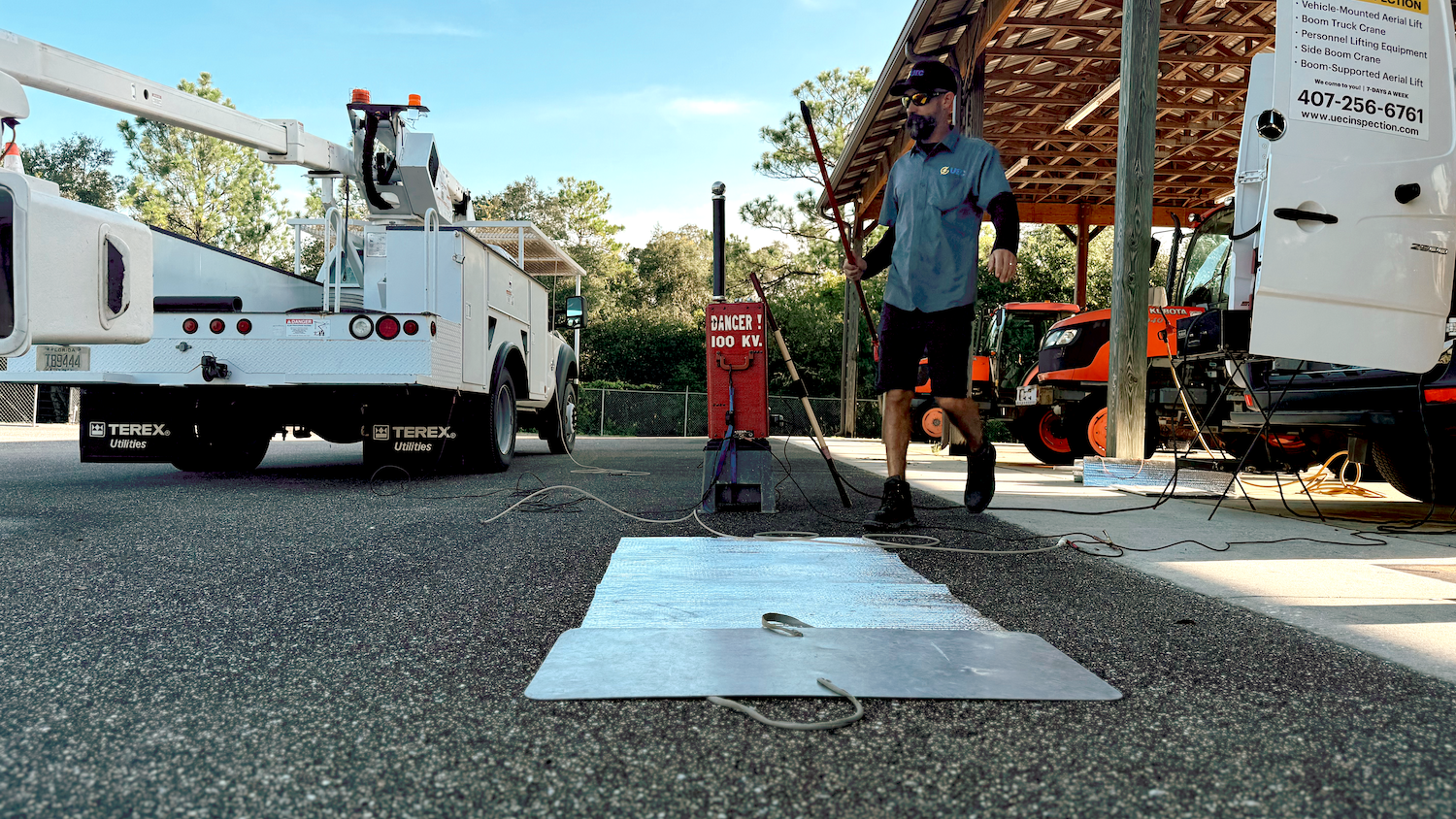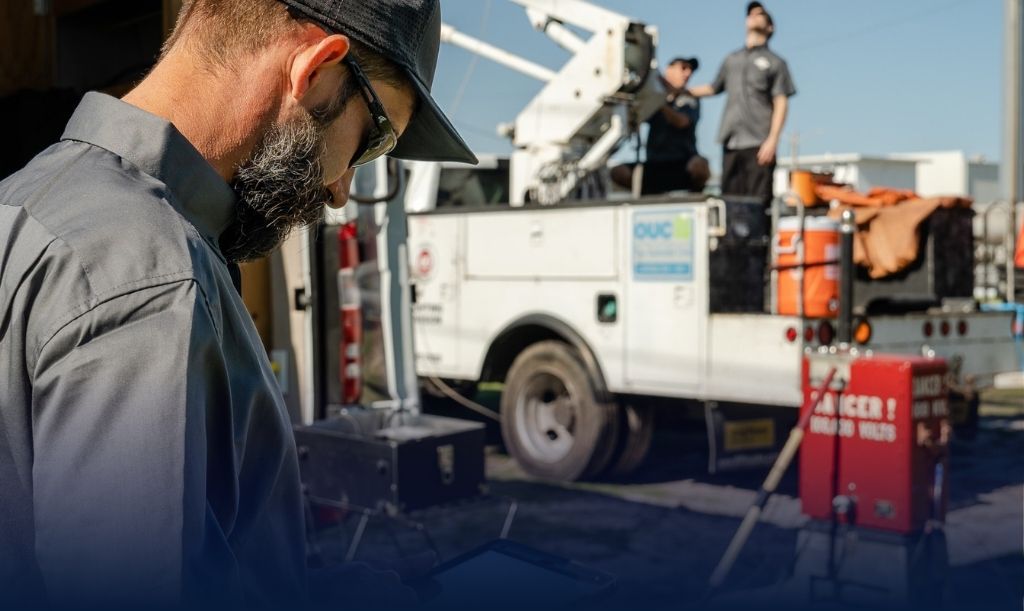
We perform comprehensive dielectric safety testing with mobile on-site services to reduce downtime, lower costs, and ensure the safety of your operations.
Dielectric testing helps verify the electrical insulating integrity of applicable equipment and supports compliance with relevant OSHA requirements, ANSI standards, manufacturer recommendations, and workplace safety programs.
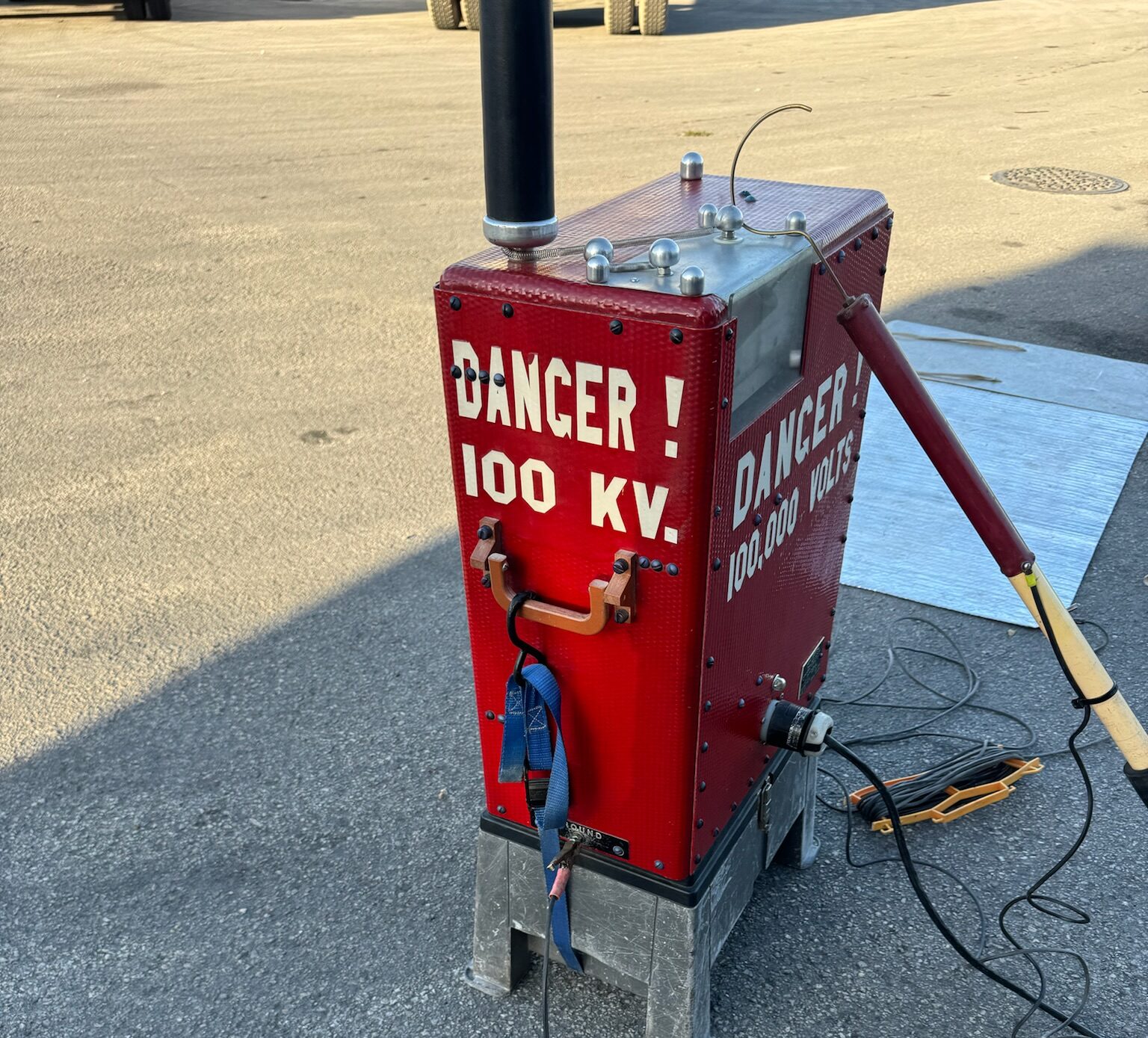
Our dielectric testing capability involves applying high voltage between two conductors to assess insulating qualities, ensuring there is no arcing or excessive current flow. We provide both non-destructive and destructive testing to verify that electrical insulation can withstand transient or surge events.
The insulation is tested to ensure it will not fail due to aging, moisture, or wear from vibration.
Serving utilities, generators, electrical contractors, and regulators, we help protect workers, enhance safety, and increase efficiency.
Prioritize safety for your team, stakeholders, and yourself with our hassle-free annual inspection services.
Dielectric testing is an inspection process that is crucial for bucket trucks, manlifts, tow trucks, boom trucks, utility trucks, and other commercial vehicles. In short, the inspection ensures that the insulation on all of the electronic components on your vehicle are secure and working properly. This helps to ensure the safety of your workers, on and off the rig—as well as the optimal performance of your equipment.
Bucket Trucks
All use of bucket trucks and other commercial vehicles are regulated by OSHA (the Occupational Safety and Health Administration) and ANSI (the American National Standards Institute), organizations that help enforce procedures and testing to keep workers and pedestrians safe in work zones and around commercial machinery.
Dielectric Testing Services | Florida & Georgia
Fleet owners are responsible for maintaining their equipment in accordance with applicable OSHA requirements, ANSI standards, manufacturer recommendations, and the specific classification and use of each unit. Insulated aerial devices may require periodic dielectric testing to verify the integrity of their insulating systems, while inspection and testing intervals can vary depending on the equipment and operating conditions. UEC helps fleet managers understand their testing needs and complete required inspections and dielectric testing on-site.
For insulated aerial devices subject to applicable electrical testing requirements, dielectric testing is an important part of verifying that the insulating system continues to perform as intended. The testing requirements and intervals applicable to a particular unit depend on factors including its classification, use, manufacturer guidance, applicable standards, repairs, and operating history.
In addition to ensuring regulatory compliance, proper testing (as well as the recording of the results) can help detect existing issues with your vehicles. This allows you to make corrections or adjustments that will prevent future problems, hazards, and safety concerns—as well as reduce the potential cost you will have from correcting said issues.
The barriers of electric insulation on your vehicle protect operators and surrounding pedestrians from dangerous electrical currents moving through your equipment. Through appropriate testing, you can ensure that the peak level of voltage does not exceed the resistance of the barrier material—keeping your equipment from being damaged and preventing human injury.
Dielectric tests can also evaluate the integrity of your equipment on multiple levels, depending on the type of test performed. For example, a dielectric strength test is designed to evaluate how high the voltage needs to be before the insulating material allows it to flow through. Alternatively, a dielectric withstand test measures the amount of time the insulation can hold a high voltage current before it begins to break down.
CALL UEC TODAY! 407-256-6761
For this test, the computer will analyze the sounds your vehicle makes while it is operating. The technology calculates the stability of your equipment by comparing the size of the truck and the loads it carries. Then, it determines a quality score. This grade is evaluated on a scale to determine whether or not your vehicle meets the necessary criteria in order to safely operate.
According to the ANSI, a dielectric test verifies the electrical insulating strength in the FRP (Fibreglass-Reinforced Plastic) parts of upper and lower booms, buckets, liners, digger derrick extensions, tool circuits, and upper control systems on certain types of commercial vehicles. During the inspection, if any defects are found, the issues are classified according to severity.
In this inspection, different parts of the truck are evaluated for functionality and condition. Though the specific parts may vary depending on the type of truck, the parts inspected usually include a minimum of twelve points of inspection:
In order to ensure that your vehicle passes inspection, it is crucial that you keep all of these parts in good working order with regular maintenance, repairs, and internal inspections. Other suggestions for proper maintenance of your vehicle can be found in manufacturer’s guidelines, owners manuals, and in the guidelines for your affiliated regulatory agencies.
CALL UEC TODAY! 407-256-6761

Equipment we test
Insulated bucket trucks and other aerial devices may be subject to periodic electrical testing requirements under applicable OSHA regulations, ANSI standards, manufacturer instructions, and employer safety programs. Testing intervals can vary based on the equipment classification, use, condition, repairs, and operating environment.
UEC provides on-site dielectric testing throughout Florida and Georgia to help fleet managers keep equipment testing documented and up to date.
Avoid Interruptions.
Don’t get shut down on the job! Schedule your annual testing and inspection today.
Trustindex verifies that the original source of the review is Google. Fantastic work from Garrison, very fast and efficient. Communication is great and their availability is really good.Santiago ATrustindex verifies that the original source of the review is Google. Informative and Professional. Garrison was very knowledgeable and patient with me, answered any questions that I had when it came to what all is part of the testing process.Steven MTrustindex verifies that the original source of the review is Google. Great & timely serviceJoseangel gTrustindex verifies that the original source of the review is Google. Best service in town! Highly recommended!!!Robert STrustindex verifies that the original source of the review is Google. Extremely professional. Always willing to work around crews schedules. Great work !!!!Mike MTrustindex verifies that the original source of the review is Google. We are a large Infrastructure company in the power delivery sector. Utility Equipment Consultants has been testing are equipment for 15 plus years. They are an awesome company to work with and do a very thorough job! Would highly recommend.Victor h
©2026 Utility Equipment Consultants | On-Site Equipment Testing & Inspection | Powered by Amiga Web Design